
High-Altitude Certified Helicopters for Everest, Annapurna & Remote Himalayan Operations
Aircraft Types Used for Helicopter Flights in Nepal
Nepal’s flight environment is unlike any other—thin air, steep terrain, sudden weather shifts, and landing zones above 5,000 meters require specialized high-performance helicopters equipped for extreme altitudes.
LuklaHelicopter.com works only with CAAN-licensed operators who use aircraft proven safe and capable in the Himalayas, including the legendary Airbus AS350 B3 / H125 and the rugged Bell 407 series.
Primary use-case
High-altitude transfers & rescues
Key constraint
Density altitude & payload limits
Partner baseline
CAAN compliance + manufacturer programs
Core helicopter types used in Nepal
These are the aircraft families most commonly selected for Himalayan missions, and why they are considered suitable in Nepal’s operational environment.
Airbus AS350 B3 / H125
High-altitude standard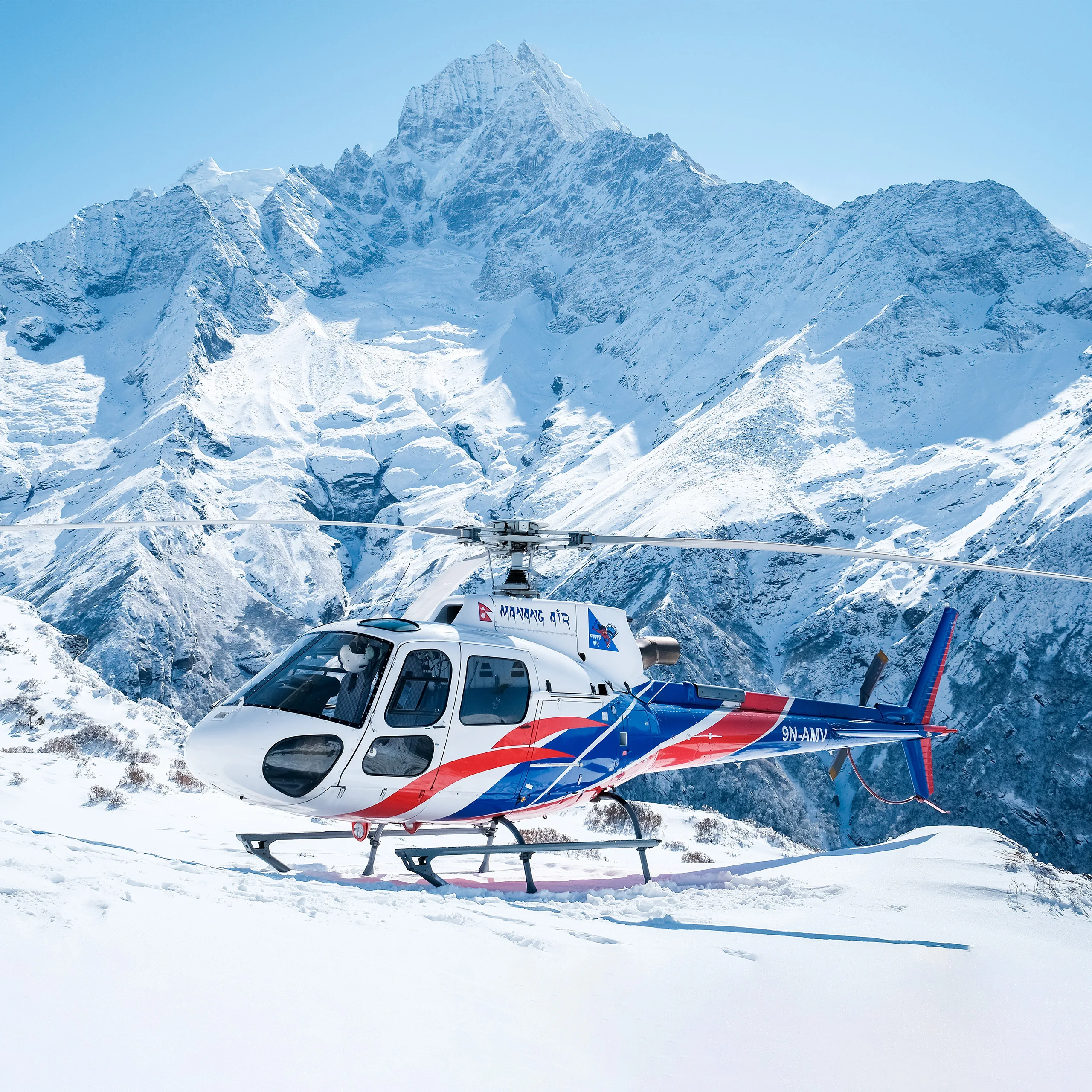
The AS350 B3 platform is the most trusted helicopter for Everest and high-altitude operations. It’s known for exceptional hot-and-high performance and operational reliability in thin air.
- Record: Landing on Mount Everest (8,848m) — Didier Delsalle, 2005
- Engine: Safran Arriel 2B1 / 2D
- Max altitude: 23,000+ ft (environment dependent)
- Capacity: 5 passengers + cargo (payload varies with altitude/weather)
- Safety advantages: FADEC engine control, strong cold performance, short/uneven landing capability
Used for: Kathmandu ↔ Lukla, EBC tours, high-altitude pickups (Pheriche / Kala Patthar / Gorakshep), medical evacuations.
Airbus H125 (newer generation)
Efficiency + stability
The H125 is the modern evolution of the AS350 B3 platform, with improved engine performance, efficiency, and smoother operations—especially valuable in gusty mountain winds.
- Upgraded engine & performance
- Reduced fuel burn
- Improved avionics suite
- Better stability in turbulence / valley winds
Preferred for: higher altitude rescues, filming/photography missions, and some VIP charters (operator dependent).
Bell 407 / 407GXi
Mid-altitude & range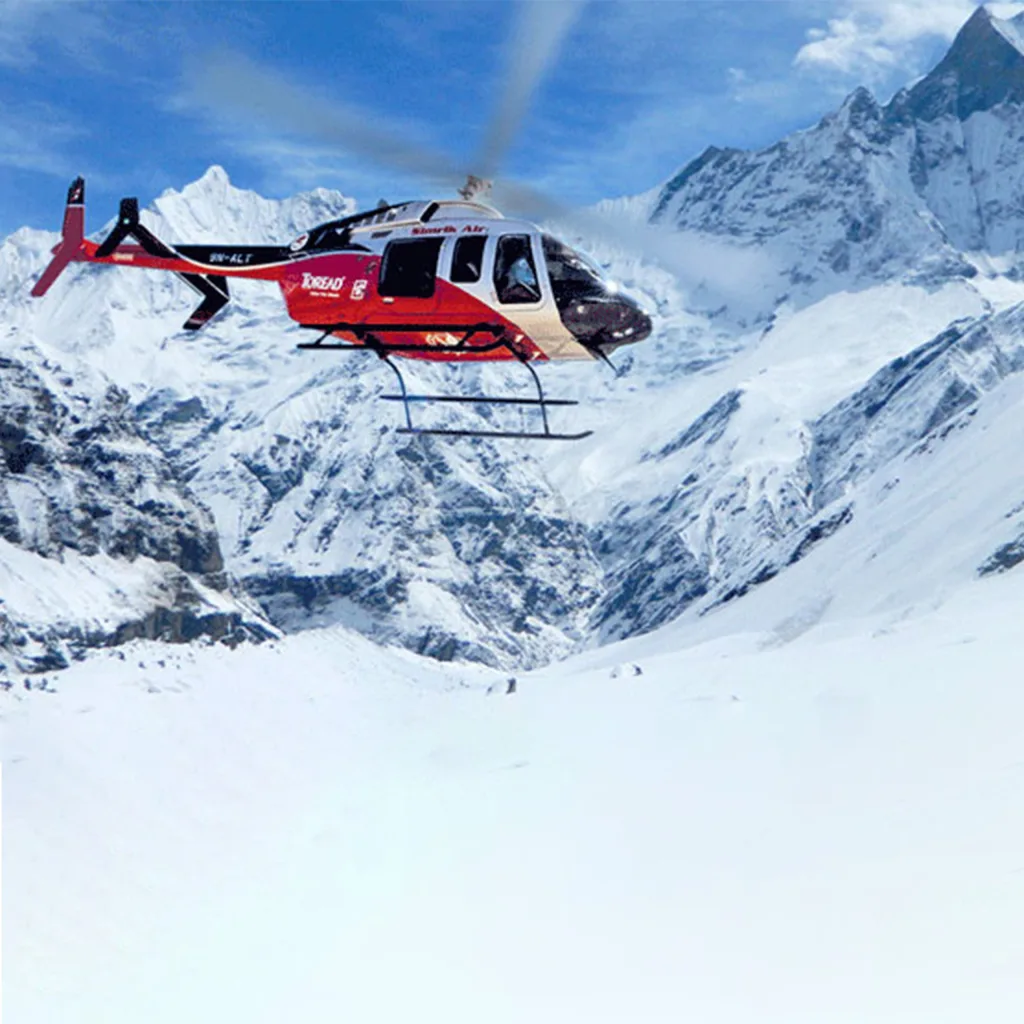
The Bell 407 is widely used for mid-altitude operations and long-range charter missions. It offers a smooth ride and strong handling characteristics.
- Engine: Rolls-Royce 250-C47B
- Seating: 5 passengers
- Max altitude: 18,000+ ft (environment dependent)
- Strength: faster cruise, maneuverability, comfort
Best for: Pokhara → Muktinath, Annapurna Base Camp, Mustang / Lo-Manthang, long-range charter flights, filming missions.
Key improvements: AS350 B3 vs H125
A simple comparison to explain why many operators prefer the H125 for newer deployments and demanding missions.
| Feature | AS350 B3 | H125 |
|---|---|---|
| Engine | Arriel 2B1 | Arriel 2D |
| Power | Excellent | Higher & more efficient |
| FADEC | 1st Gen | 2nd Gen |
| Vibration | Moderate | Much lower |
| Hot/High performance | Great | Best in class |
Other helicopter types seen in Nepal
These aircraft may appear in Nepal for cargo, logistics, or specific charter profiles, but suitability depends heavily on altitude, payload, and mission profile.
MI-17 (twin engine, heavy lift)
Cargo & logisticsUsed for heavy cargo movement, expedition logistics, and select evacuation or support operations where lift capacity is required.
Robinson R66 / R44 (limited use)
Lower altitude onlyUsed occasionally, but altitude limits make these aircraft less suitable for demanding Himalayan profiles.
EC130 (rare in Everest)
Comfort focusedSometimes used for VIP flights at lower elevations; not common for Everest-region profiles due to ceiling and performance constraints.
Helicopter suitability by region
A practical view of which aircraft are typically selected for different routes and mission types in Nepal.
| Region / Mission | Recommended helicopter |
|---|---|
| Kathmandu → Lukla | AS350 B3 (H125), B2, FXII |
| EBC / Kala Patthar | AS350 B3 / H125 only |
| Annapurna Base Camp | Bell 407 / AS350 B3 |
| Muktinath | Bell 407 |
| Mustang / Lo-Manthang | Bell 407 |
| Filming / Photography | H125 |
| Rescue (above 4,500m) | AS350 B3 / H125 |
What makes Nepal’s environment unique
- World’s highest landing zones
- Wind funnels from steep valley walls
- Low oxygen affects engine performance
- Frequent micro-weather changes
- Very short landing strips (Lukla, Syangboche)
- Heavy rescue traffic during trekking seasons
Only high-performance aircraft and trained mountain pilots can operate safely across these profiles.
Maintenance standards baseline
Operators we work with are expected to follow manufacturer maintenance programmes and CAAN compliance practices.
- CAAN-approved maintenance schedules
- Daily pre-flight and post-flight checks
- Engine cycle monitoring
- Airbus / Bell engineering standards
Practical note: “Safe aircraft” is not a marketing label—it’s the result of engineering discipline plus real-world Himalayan operating experience.