
Himalayan Weather Operating Standards for Helicopter Flights
Weather is the single biggest factor that determines if a helicopter can safely take off, land or continue a mission in the Himalayas. At LuklaHelicopter.com we never pressure pilots to fly just because the sky “looks clear” from the ground.
Focus: Morning vs afternoon flights, cloud base and visibility, Lukla-specific wind, Everest valley behaviour and strict “No-Go” limits where safety always wins over schedule.
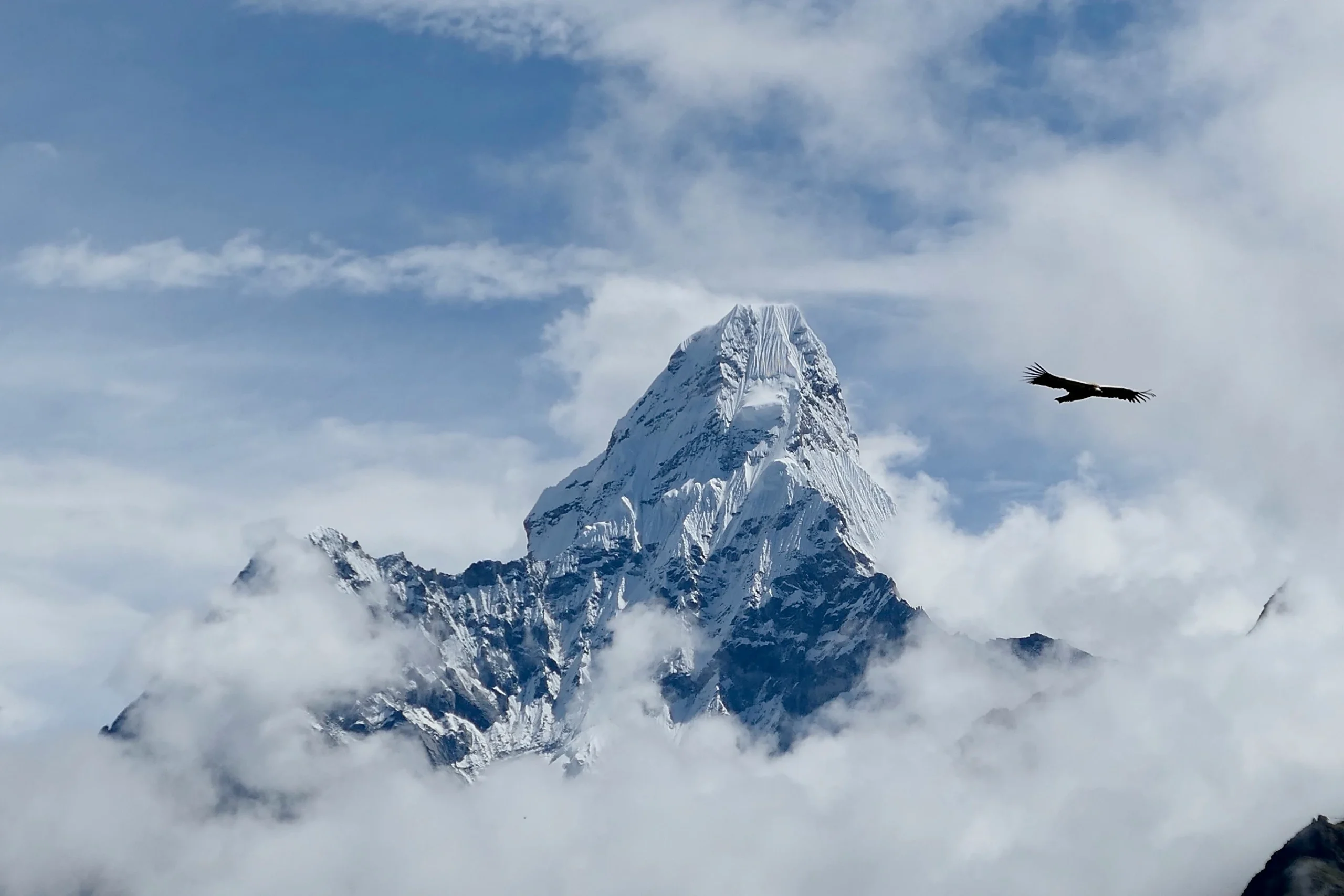
1. Why Weather Matters More in the Himalayas
The Himalayas create some of the most complex flying conditions in the world. Helicopters operate under Visual Flight Rules (VFR), meaning the pilot must keep terrain in sight at all times. Clouds, wind and visibility are not just “comfort” issues – they are safety limits.
- High terrain creates narrow, one-way-in/one-way-out valleys.
- Clouds form quickly along ridgelines and glacier valleys.
- Mountain winds can change direction and strength in minutes.
- Poor visibility can leave pilots with no safe escape route.
Key idea: Clear weather where you are standing does not guarantee clear weather along the full route or at the destination helipad.
2. Morning vs Afternoon Flights – Why Timing Is Critical
Safest operations typically occur between early morning and late morning. As the day warms up, the atmosphere becomes unstable and valleys begin to fill with cloud and turbulence.
- Calmer winds and more stable air.
- Better visibility in valleys.
- Clouds still forming, not fully developed.
- More margin for return or diversion.
- Thermal activity creates bumps and turbulence.
- Clouds fill the valleys and passes.
- Storm cells and showers are more likely.
- Less time available to wait or re-route safely.
3. Cloud Base, Visibility & Valley Fog
Even thin cloud layers or valley fog can make a route unsafe. Under VFR, a pilot must be able to see and avoid terrain at all times – guessing what is behind a cloud bank is not allowed.
- Low cloud base can close the corridor between Lukla and Namche.
- Fog in lower valleys often forms around Phakding, Jorsalle and Monjo.
- Whiteout near glaciers makes it impossible to judge distance or slope.
Common question: “I see blue sky above me – why is my flight delayed?” Because what matters is the cloud base and visibility along the route, not just the sky above your lodge or tea house.
4. Lukla-Specific Weather Challenges
Lukla is famous not only for its short, sloping runway but also for its rapidly changing weather. Helicopters share the same valley and must respect the same basic limits.
- Crosswinds can create unstable approaches and departures.
- Tailwinds down the runway reduce lift margins for landing.
- Cloud at the ridge above Lukla can block the final segment of the approach.
- Fog in the Dudh Koshi valley prevents safe descent from higher villages.
Reality check: Lukla might look “perfect” from the helipad, but one bend further down the valley can be fully closed. Pilots must be able to see and safely fly the entire route, not just the airport itself.
5. Everest Valley Weather Behaviour (Pheriche → Lobuche → Gorakshep → EBC)
The upper Everest valley has its own weather “personality”. Conditions can look safe from one village and be unsafe just a few minutes of flight away.
- Pheriche: Strong valley winds and turbulence are common.
- Lobuche: Cloud walls often build quickly against surrounding peaks.
- Gorakshep: Very thin air reduces helicopter performance and power margin.
- Everest Base Camp / Kala Patthar: Snow + cloud can create instant whiteout.
Pilots will only operate when every segment of this route – not just the final landing zone – is within safe limits for visibility, wind and escape options.
6. “No-Go” Criteria – When Flights Will Not Operate
A “No-Go” decision is a safety barrier. It means that, based on current conditions, the pilot believes the risk is too high. Typical reasons include:
- Insufficient visibility to see terrain and maintain safe separation.
- Valleys blocked by cloud, fog or snow showers.
- Strong or unpredictable winds, especially near ridges and passes.
- Thunderstorms or convective cells in or near the route.
- Whiteout conditions where sky and snow blend together.
Our policy: We support “No-Go” decisions. We do not argue with pilots about weather or try to convince them to “just try”. Safety comes before timelines, bookings or any commercial pressure.
7. Why the Pilot in Command Always Has Final Say
By aviation law, the Pilot in Command (PIC) has full authority over whether a flight departs, continues, diverts or returns. Only the pilot has the real-time view of aircraft performance, weather behaviour and escape options.
- The pilot sees actual wind, turbulence and cloud gaps.
- The pilot knows the helicopter’s current performance and margins.
- The pilot is trained to prioritise safety over every other factor.
Non-negotiable: At LuklaHelicopter.com, the pilot’s weather decision is final. We exist to support safe operations, not to override professional judgement.
Need a clear explanation of weather risks for your route?
Our team can help you understand how weather might affect flights to Lukla, Everest Base Camp, Annapurna, Langtang, Mustang and more – before you book or during your trek.
Email: info@luklahelicopter.com
For full helicopter safety information, see the Nepal Helicopter Safety & Operations Guide .